Harriet Lavoy, or Hariot as her name is often recorded in census documents, is a difficult woman to trace. As such, this record of her life will be somewhat incomplete. I urge any descendants of this woman to reach out and fill in the gaps where they can.
 The third child of Achan Lavoy and Mary Ann Mackay, Harriet was born on the 28th of January 1846 in Onslow, Quebec. Onslow (or The Quio as it was often called at the time) was a small settlement: it was not yet established as a municipality, did nt yet have a local church built, but was simply where the lumbermen of the region would come to buy food. Some of the land had been bought up, logged, and farmed with potatoes, oats and cattle by 1840.
Ten years prior to Harriet’s birth, the Chats fur trading post off of Lac des Chats, which was central to the region, closed down. The Indians whose hunting grounds were located around Onslow were displaced from the area, and it went from a region of fur trade to shipping and lumbering of White Pine. Two saw mills on Pontiac Bay, just upstream, made the area an ideal location for lumbermen to work, as her father Achan would have done. Pontiac Village became the first real settlement to grow up in the area, and this, or the nearby Eganville, is likely where the family lived. The growth of this settlement was largely due to the traffic on the Quio and Ottawa rivers that had increased when a 3 mile long horse drawn portage train was built beteen Pontiac Bay and Lac des Chats. (This information comes from the Onslow and Quyon History)
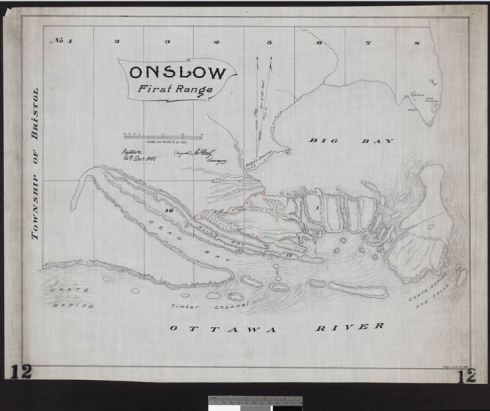
An early survey map of Onslow, made the year prior to Harriet's birth.
I haven’t yet found the Lavoy family documented until 1871, long after Harriet left home and married. With research done by family historian, Robin Murphy, and from descriptions in The Wilfred Ronald Leavoy Autobiography by Garnet Leavoy, I can imagine how her childhood may have been. She would have stayed in the Onslow area of Quebec until roughly age 16, when her father moved the family across the Ottawa River to follow the logging into the Sand Point area around Arnprior. Her father would been gone for 5-6 months a year with his crew out in the snowy forests as the camp chef. Her mother would have been left to tend the children on her own. The Lavoy children were purported to be some of the first white children born in the Pontiac area, and it would have been a rough and lonesome space for children.
When she was 19 years old, Harriet met and married a 27-year-old farmer named James Kerr. On the 10th of April, 1865, the couple said their vows somewhere in Pontiac. Historical records show two possible locations for their marriage in Pontiac: St John the Evangelist church, which was built in 1855, or the Onslow Mission (Methodist), built in 1859.

My first record of the new Kerr family is in the 1871 census, placing them in the community of Ross in North Renfrew. The other Lavoy family members also resided in Renfrew at the time, so James (32) and Harriet (24) may have followed her family in that direction. Having been married for about 6 years, the couple had three sons: John William who was born within a year of their wedding and was now 5, Andrew who was 3, and baby James Jr. The family farmed and belonged to the Church of Scotland.
The family stayed in Ross for the following 20 years where they continued to farm. I have located them on the census of 1881, which is badly faded and nearly illegible. Despite this, it clearly shows that the family has hardly changed in its dynamics: it has merely aged. James (40), “Hariot” (31) and their 3 sons: William John (15) who works with his dad on the farm, Andrew (13) and James Jr. (11) all still live in the same location ad attend the same church. It looks as though James and Harriet had no more than their 3 children, quite a change from the Lavoy generation before.

In the census of 1891, the household has enlarged with the addition of the eldest son, William‘s new Scottish-born wife Jennie into the home. They had a Presbyterian marriage in Renfrew on April 10, 1899 witnessed by both sets of parents. There is also a young lodger who may have helped on the Kerr farm or paid rent to the family. Other interesting details on the census include the birthplaces of James (53) and Harriet (39). He is listed as being born in Scotland, whereas previous documents point to Ontario. She is listed as an Ontarian by birth as opposed to Quebecois. The other sons are now adults and also likely helping their father in his labour.
The following years brought dramatic change in the life of the Kerr family. The two other sons were married in the summer of 1892. On the 20th of July, Andrew, the 2nd son, was married to Harriett Ellen Thomson in Horton, outside of Arnprior. Their marriage was witnessed by James Kerr Jr. and Harriett’s sister Sarah. Then, only a few weeks later, on August 10th, the youngest son James Jr. married Jennie Frood in Horton. Sadly, the growing family was hit hard on October 15, 1894, when Jennie McConnell who was only 24, died of consumption, leaving William a young widower only 5 years after his marriage.
William met another woman and did remarry: Charlotte Wilson, a woman 13 years younger than he and from Bagot, became his bride on the 23rd of March 1904. The three sons and their wives all followed in their father’s path, continuing to farm the land in the Arnprior area.
Thank you to Deb Lavoy for answering my questions about William.

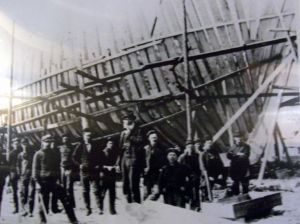 There are many descendants of the man called Achan Lavoy. They may know him as Ecan or Aken or Edward or Etienne, but regardless of the spelling, most individuals seem to be aware of his mythic appearance in Canada from France. I have written of his work as a cook for the lumber camps during the winter months, but one thing I have not written much of is his life in the boat building industry. A valuable skill during the 1800s in a region that was heavily logged, this was also passed down to his son, my ancestor, Peter Leavoy.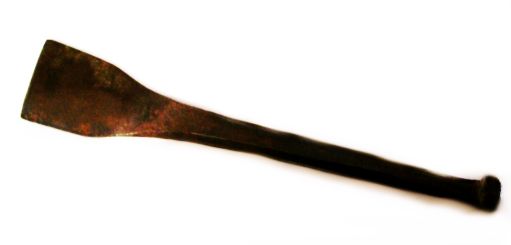






 Oh What a Tree